

Explore how a large-scale open-pit mining operation improved fragmentation, reduced explosive costs, and optimized bench blasting using free-fall activated spacers for air decking.
Slug: blast-efficiency-case-study-free-fall-activated-spacer
---
Improving Blast Efficiency with Free-Fall Activated Spacers: A Case Study in Large-Scale Open-Pit Mining
Background
A large-scale open-pit mining operation in a hard-rock environment faced ongoing challenges with blast performance. Despite using conventional fully loaded blast holes, the operation experienced inconsistent fragmentation, excessive vibration near pit boundaries, and rising explosive costs. Management sought a practical solution to improve blast efficiency without major capital investment.
Challenge
The mine's key challenges included:
- Variable rock conditions across multiple benches, ranging from competent granite to fractured zones
- Community proximity requiring blast vibration below 5 mm/s peak particle velocity
- High explosive consumption averaging 0.65 kg per bank cubic meter
- Inconsistent fragmentation leading to secondary breaking and crusher feed issues
- Need for faster charging cycles to maintain production schedules
Solution: Implementing Free-Fall Activated Air Decking Spacers
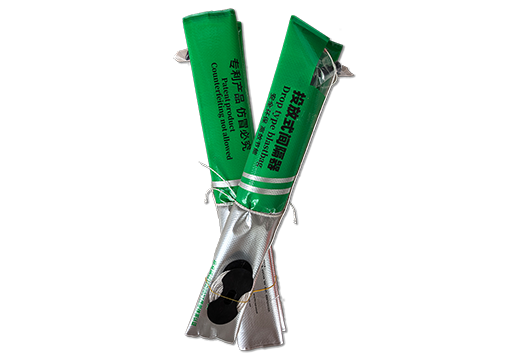
After evaluating several options, the mine's blasting team decided to trial free-fall activated spacers for explosive air decking. The approach involved:
1. Blast Design Modification
- Converted 20% of fully loaded holes to air-decked designs
- Installed free-fall activated spacers at calculated depths to create 1.5m air gaps
- Reduced explosive column length by approximately 18% per hole
2. Loading Procedure
- Loaded bottom charge first
- Dropped spacer into hole using standard charging equipment
- Verified spacer position with depth markers
- Loaded top charge above the air deck
- Applied standard stemming material
3. Monitoring and Adjustment
- Tracked vibration levels with seismographs
- Photographed muck piles for fragmentation analysis
- Recorded loading times and compared with baseline data
Results After 90 Days
The trial delivered measurable improvements across multiple performance indicators:
Metric | Baseline | After Spacer Implementation | Improvement
----------------------|---------------|-------------------------------|-------------
Explosive consumption | 0.65 kg/bcm | 0.52 kg/bcm | -20%
Peak vibration | 8.2 mm/s | 4.1 mm/s | -50%
Mean fragment size | 450 mm | 320 mm | -29%
Secondary breaking | 12% of shots | 4% of shots | -67%
Loading time per hole | 4.2 minutes | 3.6 minutes | -14%
Key Observations
1. Energy Distribution Improvement
The air gap created by the free-fall activated spacer allowed detonation energy to distribute more effectively along the borehole. This produced better radial cracking and reduced overbreak near the collar zone.
2. Vibration Reduction
By reducing the total explosive mass and staging the energy release, the mine achieved consistent compliance with community vibration limits. This eliminated costly blast scheduling restrictions.
3. Cost Savings
With explosive consumption reduced by 20% and secondary breaking costs down by two-thirds, the mine estimated annual savings exceeding $180,000 in a medium-sized operation.
4. Operational Simplicity
The free-fall activation method required no additional equipment or training beyond standard charging procedures. Crews adapted quickly, and spacer placement became part of routine workflow.
Lessons Learned
- Spacer placement accuracy is critical. Depth verification tools improve consistency.
- Wet holes require spacers with adequate weight or water-resistant design to ensure proper descent.
- Air deck length should be optimized per bench rather than using a single standard dimension.
- Integration with existing blast design software helps predict outcomes before field trials.
Conclusion
This case study demonstrates that free-fall activated spacers for explosive air decking can deliver significant, measurable benefits in real-world open-pit mining conditions. For operations seeking to improve blast efficiency, reduce costs, and meet environmental constraints, air decking with free-fall spacers offers a practical, low-risk solution.
Keywords: open-pit blast efficiency, free-fall spacer case study, air decking results, mining blast optimization, explosive cost reduction, blast vibration control, fragmentation improvement, bench blasting performance, mining case study, large-scale blasting
This website uses cookies to ensure you get the best experience on our website.
 中文
中文



 WhatsApp
 Phone
Phone
Comment
(0)