

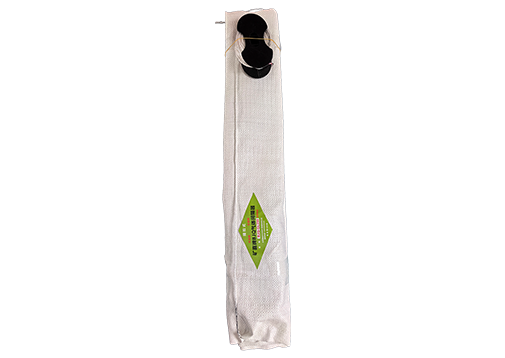
Comprehensive Guide to Pneumatic Blast Spacers in Mining & Quarrying
In modern open-pit mining and quarrying operations, the traditional method of solid loading—where an entire blasthole is filled with explosive from bottom to top—is rapidly becoming obsolete. Solid loading leads to excessive ground vibration, flyrock, poor fragmentation (resulting in oversized boulders), and a high consumption of ammonium nitrate-fuel oil (ANFO) or emulsion explosives.
To counteract these inefficiencies, engineers and blasters have adopted advanced interval charging technologies, primarily utilizing pneumatic blast spacers. These devices create a controlled void—an air gap or a water gap—between explosive charges within a single borehole. This technique, known as "decking" or "intervallic blasting," optimizes the energy distribution, allowing for significant cost savings and improved safety metrics.
The mechanics are elegantly simple yet highly effective:
1. Deployment: The deflated spacer, attached to a dedicated lanyard or drop cord, is lowered into the blasthole on the explosive charge column.
2. Actuation: Once the spacer reaches the predetermined depth interval (the "deck" location), a simple mechanical trigger mechanism is activated. In the case of a "push-type" mechanism, a rod is physically pushed, puncturing an internal rupture disc or valve.
3. Inflation: A high-pressure inert gas cartridge (typically nitrogen) releases into the bladder of the spacer. Within seconds, the cylindrical bladder inflates, expanding to the exact diameter of the borehole.
4. Stemming: The inflated bladder acts as a solid piston, providing a calculated standoff distance between the lower explosive charge and the upper charge (or the top of the hole). It effectively "stems" the hole without the need for bulky drill cuttings.
- Explosive Savings: By creating air gaps, the explosive energy is forced to act more efficiently on the rock face. Mines typically report a 10% to 30% reduction in powder factor (kg of explosive per ton of rock fragmented).
- Reduced Ground Vibration: Air gaps absorb and dissipate shockwaves. This significantly lowers Peak Particle Velocity (PPV), protecting nearby infrastructure, haul roads, and surrounding communities.
- Improved Fragmentation: The pneumatic cushion creates a "double-wave" effect. The initial shockwave reflects off the air gap, enhancing the crushing effect at the burden face.
- Operational Speed: Eliminates the labor-intensive process of manually carrying and dumping sand or drill cuttings for stemming. One operator can deploy dozens of spacers per hour.
- Environmental & Safety: Reduces reliance on non-renewable stemming materials and keeps personnel further away from the active blasthole during loading.
As described above, this is the workhorse for standard dry or damp blastholes ranging from 90mm to 311mm. It is ideal for general-purpose bench blasting where cost reduction and basic vibration control are the primary goals.
Application: Geothermal mines, oil sands operations, or deep-level mines where bottom-hole temperatures can exceed 60°C to 80°C.
Features: Utilizes specialized heat-resistant elastomers and high-temperature gas cartridges. Standard rubber bladders would melt or become brittle, rendering the spacer useless. The High-Temperature Spacer ensures consistent inflation and deck integrity even in extreme thermal gradients.
Application: Heavy ANFO applications, dual-leg burn cut designs, or situations requiring a robust transfer of detonation energy across a deck.
Features: Unlike a standard air gap which relies on shockwave reflection, this spacer is constructed from high-strength composite materials that allow the detonation wave to partially transmit across the gap. It maintains a semi-rigid structure that prevents the charges from collapsing into the air gap while still allowing for energy coupling. Essential for high-velocity drop-bottom charging.
Application: Complex geologies with hard caprock overlying softer material, or when using High-Speed Detonation (HSD) emulsion.
Features: This advanced pneumatic device features a two-phase inflation system.
* Phase 1 (Fast): Rapid initial inflation to secure the spacer's position and prevent it from floating upwards during loading.
* Phase 2 (Slow/Controlled): A secondary, slower inflation that meticulously presses the stemming material (if used in conjunction) or ensures perfect contact with the upper charge. This prevents "air shorts" and ensures uniform detonation velocity across the deck.
Application: Water-bearing blastholes (wet holes) where ANFO would simply dissolve and run.
Features: Instead of a gas bladder, this system uses a collapsible water tank. Once in position, the tank ruptures or opens, releasing a calculated volume of water to form a "water deck." Water is incompressible, making it an excellent stemming medium for wet holes. It also provides superior gas venting control, reducing the risk of "dead pressing" (where gases get trapped).
Application: Deep holes where dropping a heavy gas spacer might damage the explosive column or where precise placement is critical without premature actuation.
Features: The actuation mechanism is reversed. The spacer is lowered into the hole in a locked, uninflated state. A rope or lanyard is pulled from the surface. This pulling action triggers the internal valve to release gas. This method ensures the spacer remains dormant during descent, preventing accidental inflation at the wrong depth.
Application: Shallow holes or emergency stemming scenarios.
Features: A purely mechanical, gravity-actuated design. The spacer is dropped onto the explosive column. As it impacts the deck surface, an internal impact plate releases the gas. While less precise than the push-type, it is highly reliable and requires no external lanyard manipulation, making it ideal for unmanned or automated loading systems.
Spacer Series | Minimum Diameter | Maximum Diameter | Material Build |
Standard Push-Type | 90 mm (3.5") | 150 mm (6") | Industrial Rubber/Nylon |
Heavy-Duty Push-Type | 155 mm (6.1") | 200 mm (8") | Reinforced Polyethylene |
Extra-Large Push-Type | 205 mm (8.1") | 311 mm (12.2") | Steel-Reinforced Composite |
Feature | Standard Model | High-Pressure Model | Deep-Hole Model |
Operating Pressure | 0.15 - 0.25 MPa | 0.30 - 0.50 MPa | 0.20 - 0.40 MPa |
Max Operating Depth | 50 meters | 100 meters | 200 meters |
Collapse Resistance | > 2.0 MPa | > 4.0 MPa | > 5.0 MPa |
- Operating Temperature: -20°C to +60°C (High-Temp models: -20°C to +120°C).
- Gas Cartridge: Factory-sealed, non-flammable inert gas. Compliant with international air transport regulations (IATA Section II for Mining Equipment).
- Shelf Life: 5 years from manufacture date when stored in original packaging, away from direct sunlight and corrosives.
1. Survey & Design: Input your bench height, burden, and spacing into blast design software. Determine the optimal "deck height" (typically 0.5m to 2.0m).
2. Loading: Use a dedicated explosive loader truck or a pneumatic loading chute.
3. Spacer Deployment:
* Tie the spacer lanyard to the loading head or a designated drop point.
* Lower the explosive charge to the calculated depth.
* Signal the operator to release the Push-Type Spacer.
4. Verification: Many modern spacers have a visual flag or radio telemetry (optional) to confirm successful inflation at the correct depth.
5. Secondary Loading: If performing a double-deck blast, load the second charge above the inflated spacer. Ensure the primer is in contact with the spacer or upper charge for efficient detonation transfer.
Feature | Solid Loading (Traditional) | Mechanical Stemming (Sand/Rock) | Pneumatic Gas Spacer (Modern) |
Cost per Blast | High (Max Explosives) | Medium (Requires Hauling) | Low (Reduced Explosives) |
Vibration Control | Poor | Fair | Excellent |
Fragmentation | Excessive Crushing | Moderate | Optimal (Reduced Oversize) |
Q1: Is the gas inside the Push-Type Spacer flammable?
No. The cartridges are filled with food-grade Nitrogen or Argon. These gases are inert, non-combustible, and pose no risk of accidental detonation even if the blasthole catches fire.
Q2: What happens if the spacer gets stuck in a crooked hole?
Pneumatic spacers are designed with a tapered leading edge. If minor sticking occurs, applying slight downward pressure from the drill rig usually pops it past the washout. If it fails to inflate, the built-in fail-safe mechanism releases a small bypass valve to deflate it for retrieval.
Q3: Can these spacers be used with Emulsion explosives?
Absolutely. In fact, they are highly recommended for Emulsion. Emulsion is more expensive than ANFO, so saving 15-20% of emulsion usage provides a rapid Return on Investment (ROI).
Q4: How does a Dual-Speed Spacer improve results over a single-speed one?
Single-speed spacers can sometimes create a "chimney effect" where the explosive column expands too quickly. Dual-speed controls the expansion rate, ensuring the gases produced by the detonation are perfectly contained and utilized for heaving, rather than escaping upwards.
Q5: Are water-hole spacers necessary if I use emulsion?
Yes. While emulsion is waterproof, it is still subject to "void collapse" in wet holes. Water spacers provide a dense, incompressible barrier that prevents the emulsion from channeling through the water and losing its energy on the collar instead of the toe.
The integration of advanced stemming solutions like the Push-Type Gas Spacer, High-Temperature Spacer, and Water-Hole Spacer is no longer a luxury but a necessity for competitive and environmentally responsible mining operations. By optimizing blasthole energy profiles, these tools directly contribute to lowering operational costs, extending the life of mine infrastructure, and improving overall site safety.
For mining engineers looking to upgrade their blasting efficiency, investing in a trial batch of Dual-Speed or Detonation-Transmitting spacers tailored to your specific geological survey reports is the logical next step toward smarter blasting.
This website uses cookies to ensure you get the best experience on our website.
 中文
中文



 WhatsApp
 Phone
Phone