In the current landscape of the global mining industry, profit margins are constantly under pressure. With fluctuating commodity prices and rising operational costs—ranging from fuel and labor to the procurement of explosives—mine managers are forced to look beyond traditional extraction methods. The quest for optimization has led to a renewed focus on one of the most critical phases of the mining cycle: blasting. Among the various technological innovations available today, advanced air decking systems have emerged as a pivotal solution for reducing costs while simultaneously improving fragmentation quality.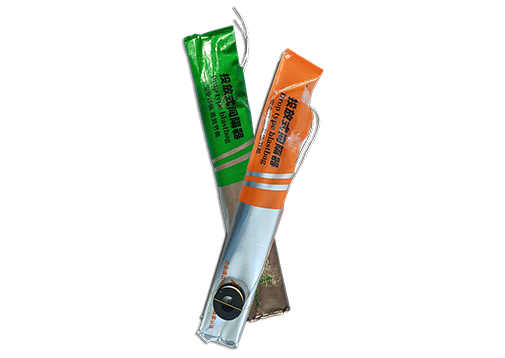
The concept of air decking is not entirely new, but its application has been revolutionized by modern engineering. Traditionally, blastholes were fully charged with explosives to ensure rock breakage. However, empirical evidence and field trials have repeatedly shown that a significant portion of explosive energy is often wasted crushing the rock immediately surrounding the borehole, rather than fracturing the rock mass further away. This "over-crushing" represents a direct financial loss. By introducing a calculated air gap—or "air deck"—within the explosive column, miners can utilize the physics of shock wave reflection to their advantage.
When an explosion occurs above an air deck, the shock wave travels down the borehole. Upon hitting the interface of the air gap, the wave reflects back up, creating a tensile force that helps fracture the rock more effectively. This mechanism allows for a reduction in the total amount of explosives used per blast, often by 15% to 20%, without sacrificing the quality of the muck pile. For a large-scale open-pit mine consuming tons of emulsion explosives monthly, this reduction translates into millions of dollars in annual savings.


 中文
中文



 WhatsApp
 Phone
Phone
Comment
(0)